
Frameless shower doors work well in bathrooms where you want the tile in plain view. Framed doors suit bathrooms where you prefer a visible metal outline around the glass. Four things decide between them: the look, the glass thickness, the cleaning, and your daily use. Read the comparison below, then match it to your own shower.
What Frameless and Framed Mean
A frameless door has no metal border around its glass. A framed door has metal on every edge of its glass. In a frameless door, the glass is the door. In a framed door, the frame and the glass work together. The difference is how much metal you see and how much support that metal provides.
| Feature | Frameless | Framed |
|---|---|---|
| Metal around the glass | Hardware only | A frame on every edge |
| Visible lines | Very few | A full outline |
| Source of support | Hinges, clamps and thicker glass | The frame and thinner glass |
| Glass edges | Mostly exposed | Covered by the frame |
| Overall impression | Open and uncluttered | Defined and structured |
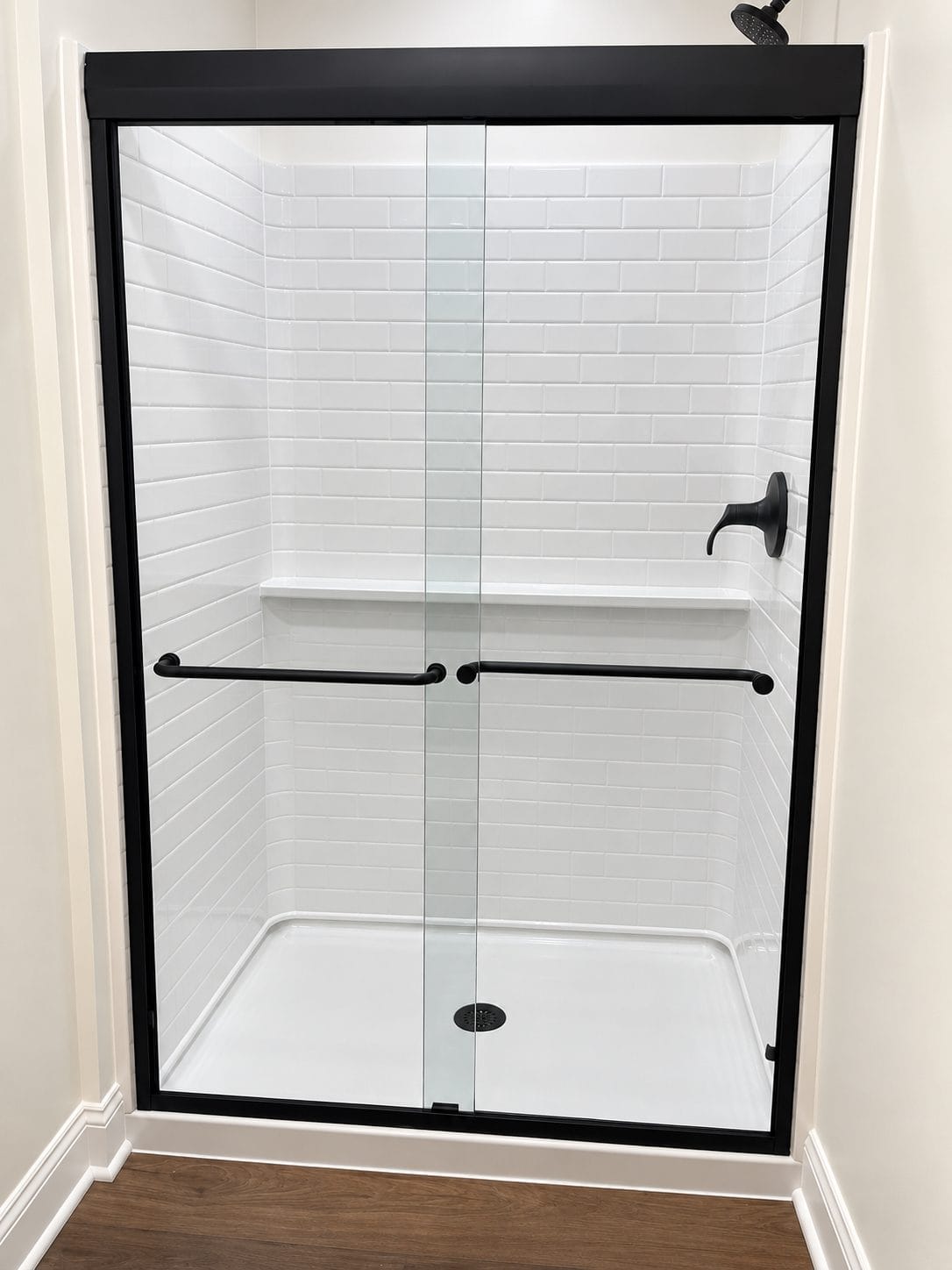
The table shows the gap in plain terms. Frameless keeps metal to a minimum. Framed adds an outline around the whole door. Neither style is a lesser version of the other. If you are also weighing a middle option, see our guide to frameless vs semi-frameless shower doors.
Which Style Looks More Open
Frameless usually looks more open. With no border, the eye passes through the glass and lands on the tile. Frameless doors also suit a bathroom where one tiled wall is the highlight. A framed door still shows the shower, but its metal outline draws a line around the view.
That outline can echo straight edges elsewhere in the room, such as a vanity or a cabinet. A bathroom full of straight lines may welcome it. A bathroom with soft tile patterns may suit an open view.
Which Style Is Easier to Keep Clean
Frameless doors are usually easier to wipe down. Fewer metal edges mean fewer places for soap film and water to collect. Framed doors have grooves where the glass meets the frame. Those grooves need regular attention.
- Frameless: Wipe the glass and rinse the hardware.
- Framed: Wipe the glass, then clean along every frame edge.
- Both: A squeegee after showers slows soap film on the glass.
Cleaning adds up over time. A shower used by many people each day feels it most.
Where Each Style Gets Its Strength
Each style gets its strength from a different place. A frameless door relies on thicker glass and sturdy hardware. A framed door relies on its metal frame, so its glass can be thinner. Both hold up well when the fit is correct.
A frameless door depends on an exact fit, so the door must be set with care. Thicker glass also lends a solid, quiet feel when the door closes.
How Your Bathroom Points to One Style
Your bathroom’s design and use often point toward one style. Use this table as a starting guide.
| Your Situation | Better Choice |
|---|---|
| You want the tile fully visible | Frameless |
| You want a defined outline around the door | Framed |
| The bathroom has a simple, minimal design | Frameless |
| The shower is used many times each day | Frameless, for easier cleaning |
| You like the idea of covered glass edges | Framed |
| You are torn between the two | Weigh the rows that matter most to you |
A bathroom can match rows from both columns. In that case, rank the rows by how much each one matters to you.
What Stays the Same in Either Style
Choosing a style changes the metal, not the layout around it. Both styles can be set up with a hinged door. A fixed panel can sit beside either one. Both start with measurements taken in your own bathroom.
The style decides how much metal you see, and nothing else about the fit. This is why the choice can come after you settle the layout. Handle shape and hardware finish are separate choices too.
How Each Style Meets the Wall and the Floor
The two styles join the walls differently. A frameless door usually attaches with hinges or clamps fixed to the wall, and the glass edge stays visible. A framed door sits inside rails that run along the wall and the base.
- Wall edge: Frameless shows a slim gap, while framed hides it behind the rail.
- Top edge: Frameless can leave the top open, while framed closes it with a frame piece.
- Floor edge: Frameless glass stops just above the shower base or curb. Framed glass sits in a bottom rail.
- Seals: Frameless uses clear strips or sealant where the glass nears a surface.
Walls that lean slightly affect both styles. Measurements taken in your own bathroom matter either way, because no two walls are alike.
How Glass Edges Differ in Care
Exposed edges and covered edges ask for different habits. Frameless glass shows its full edge, so bumps from bags or buckets matter most there. A frame shields the edge, but its grooves can collect soap film.
- Frameless: Lift laundry baskets and buckets clear of the glass edge.
- Framed: Wipe the frame grooves during regular cleaning.
- Both: Close the door gently, so the glass meets its stop without a knock.
Exposed edges let you check the glass at a glance. Covered edges hide small marks, so look at them closely during cleaning.
Common Mix-Ups About the Two Styles
People often mix up the two styles in four ways.
- Frameless means no metal: Hinges, clamps and a handle are metal. Only the border is missing.
- Framed means outdated: A framed door can look crisp in a bathroom full of straight lines.
- Thicker glass looks heavy: Clear glass stays light to the eye, even when it is thick.
- One style suits every bathroom: Each style fits a different set of priorities.
Four Steps to Choose Between Them
A short routine settles most decisions. Write your answers down as you go.
- Stand at the shower and picture the door with a metal border and without one.
- Decide whether you prefer exposed glass edges or edges covered by metal.
- Count the people who use the shower each day, including regular guests.
- Choose the style that serves your top two priorities, then check that it suits your layout.
Terms You May Hear When Comparing Styles
These terms come up when you compare doors. Learn them before you decide.
- Frame: The metal border that holds the glass on every edge.
- Header: A metal bar along the top of the door opening.
- Clamp: A small metal piece that holds glass to a wall or another panel.
- Hinge: The metal piece that lets a door swing open.
- Fixed panel: A stationary sheet of glass beside the door.
Frameless doors rely mostly on hinges and clamps, which is why they look lighter.
Hinged and Fixed-Panel Frameless Doors From J&J Glassworks
J&J Glassworks supplies frameless shower doors in hinged and fixed-panel layouts. A hinged door opens on its hinges, much like a room door. A fixed panel stays in place beside the door and fills out the opening.
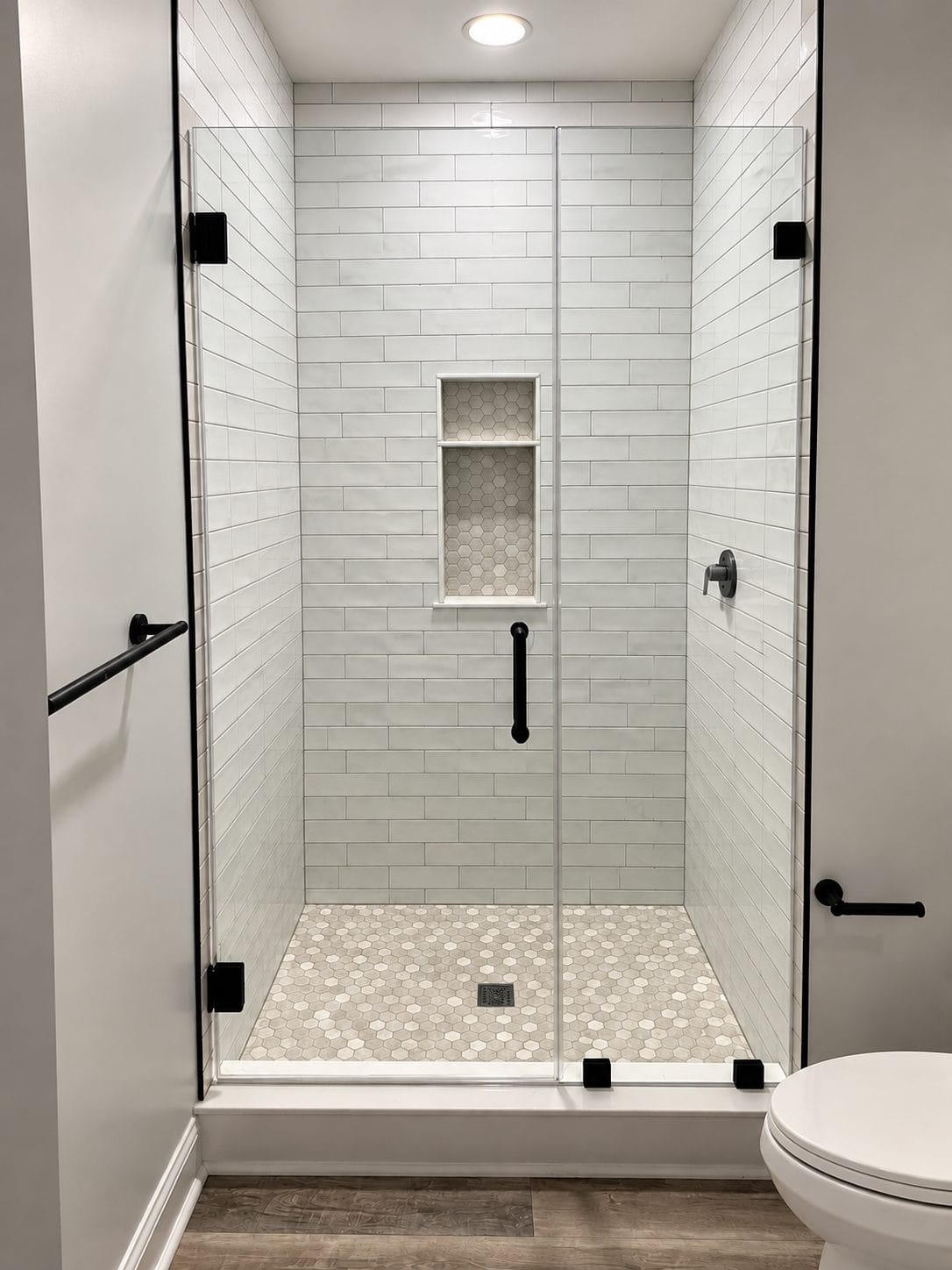
If your comparison points to frameless, those two layouts are the choices to discuss. Framed doors are another option to consider when comparing styles.
Request a Quote for Frameless Doors
Planning frameless shower doors for your bathroom? Talk to our frameless shower door team in Warminster. Tell us which layout you prefer, hinged or fixed panel, and J&J Glassworks will quote it. Call (215) 966-1577 or send a quote request through the form.